
Auto AC Maintenance: How to Stay Cool in Florida Heat
Table of Contents
- Why does the air conditioner require regular maintenance?
- Early signs of AC malfunction: when to seek diagnostics
- Professional auto AC maintenance: stages and procedures
- Stage 1: Diagnostics and vacuuming
- Step 2: Refrigerant and oil charging
- Step 3: System disinfection and cleaning
- Step 4: Operational check
- 6 Major mistakes that ruin your air conditioner
- Preventive auto AC maintenance: what the vehicle owner can do
- Save on repairs - schedule your AC maintenance in Jacksonville
Car air conditioning is no longer a luxury but an essential feature for comfort and safety, especially in Florida’s heat and humidity. Yet many drivers only remember it exists when summer temperatures spike, often finding that instead of the long-awaited cool air, the vents blow warm air with an unpleasant odor. This approach inevitably leads to premature system wear and costly repairs.
Today, the Autoland Jacksonville car service and maintenance experts explain in detail what proper A/C maintenance entails, the mistakes drivers often make, and how to extend the vehicle system's lifespan without unnecessary expense.

Why does the air conditioner require regular maintenance?
The air conditioning system is a sealed circuit in which refrigerant (Freon) and special oil circulate. It cannot be maintained using a "fix it when it breaks" approach. Even in a properly functioning system, natural processes occur that reduce efficiency:
- Natural refrigerant leakage. Perfectly sealed systems do not exist. Freon gradually seeps out through microscopic pores in the hoses and seals. Annual losses can reach 10–15% of the total volume. For a new car, the first recharge is usually performed after 2–3 years, while after 4–6 years of use, it is required every 1–2 years.
- Oil degradation. The oil circulating with the Freon loses its lubricating properties, causing the system to become acidic—a particularly critical issue for the compressor.
- Component contamination. The condenser (A/C radiator), located in front of the main engine radiator, constantly gets clogged with road grime, pollen, insects, and debris. This drastically reduces heat exchange and increases system pressure.
- Bacterial and fungal growth. Microorganisms thrive on a damp evaporator, especially in humid climates like Florida, and can become a source of an unpleasant odor when the air conditioner is turned on.
Early signs of AC malfunction: when to seek diagnostics
Do not wait for the auto AC system to fail completely. Pay attention to the following symptoms:
- The air conditioner blows warm air
- Low refrigerant level (the most common cause)
- Unpleasant (musty, sour) odor upon activation
- Evaporator contamination, bacterial growth
- Whistling, humming, or knocking sounds during operation
- Compressor bearing wear or clutch issues
- Weak airflow from the vents
- Clogged cabin air filter
- Oil stains under the hood near the compressor
- Refrigerant leaks through the shaft seal
- Reduced cooling efficiency after recharging
- Excessive system pressure or internal issues
Attention: If the air conditioner stops turning on altogether, do not try to force the button. A low-pressure safety cutoff may have been triggered. Operating the system with insufficient refrigerant destroys the compressor; it overheats and fails for lack of proper lubrication.
Professional auto AC maintenance: stages and procedures
Quality air conditioner maintenance is a comprehensive process that involves several mandatory steps.
Stage 1: Diagnostics and vacuuming
The first step at the service center is connecting diagnostic equipment to the system. The technician:
- Recovers residual refrigerant into a storage tank to measure the volume.
- Checks system integrity via vacuum testing (creating a deep vacuum). If the vacuum holds steady for 15–30 minutes, the system is airtight.
- If a leak is suspected, a UV dye is injected into the system; under a UV lamp, this reveals the exact location of the damage.
Step 2: Refrigerant and oil charging
After a successful evacuation, the system is charged strictly in accordance with the vehicle manufacturer's specifications.
- The refrigerant charge amount is listed on a label under the hood or in the car owner's manual; it varies by model.
- The margin of error during charging must not exceed ±10–15 grams. An excess of refrigerant is just as harmful as an insufficient amount: it raises pressure and accelerates compressor wear.
- Along with the refrigerant, a precisely measured amount of PAG (polyalkylene glycol) oil is added to the system. The oil volume depends on the compressor model (e.g., for Denso units, it may range from 3 to 5 ounces).
Caution: Unscrupulous service centers may add oil during every recharge "just to be safe." This leads to an excess of oil in the system, reducing cooling performance and increasing the load on the compressor.
Step 3: System disinfection and cleaning
Sanitizing the evaporator and air ducts is a separate and crucial procedure. It is mandatory if an odor appears, but it is also recommended as a preventive measure - once a year, ideally, before peak summer heat in Florida.
The process:
- The cabin air filter is removed.
- A special foam or aerosol antiseptic is applied to the evaporator area through the filter opening or the drain tube.
- The product coats the evaporator surface, eliminating bacteria and fungus, and then drains away naturally.
- A new cabin air filter is installed; the old one must be discarded, as it has accumulated mold spores and dust mites.
Step 4: Operational check
A final inspection is an essential part of professional AC maintenance. The technician checks:
- Air temperature at the vents (standard range: 39-46°F, depending on the model).
- System pressure on both the low- and high-pressure sides.
- Operation of the compressor clutch and cooling fan.
- Absence of unusual noises.
6 Major mistakes that ruin your air conditioner
Many breakdowns result from improper use rather than faulty parts. Avoid these habits:
- Not turning on the AC in cold weather
- Compressor seals dry out, and oil drains into the crankcase. When turned on again, the compressor runs "dry."
- Ignoring condenser cleanliness
- Heat dissipation drops, pressure rises, and the compressor overheats and seizes.
- Failing to replace the cabin filter on time
- Airflow is restricted, moisture accumulates, and mold/mildew grows on the evaporator.
- Delaying refrigerant top-ups until the last minute
- Insufficient refrigerant means oil isn't delivered to the compressor. Dry friction destroys the piston assembly.
- Turning it to full power immediately after entering a super-heated cabin
- This places peak load on the compressor. Open the windows for 2–3 minutes first to let the hot air escape.
- Refilling "by eye" or without vacuuming the system
- Air and moisture remain in the system, breaking down the oil and refrigerant and causing internal corrosion.
Preventive auto AC maintenance: what the vehicle owner can do
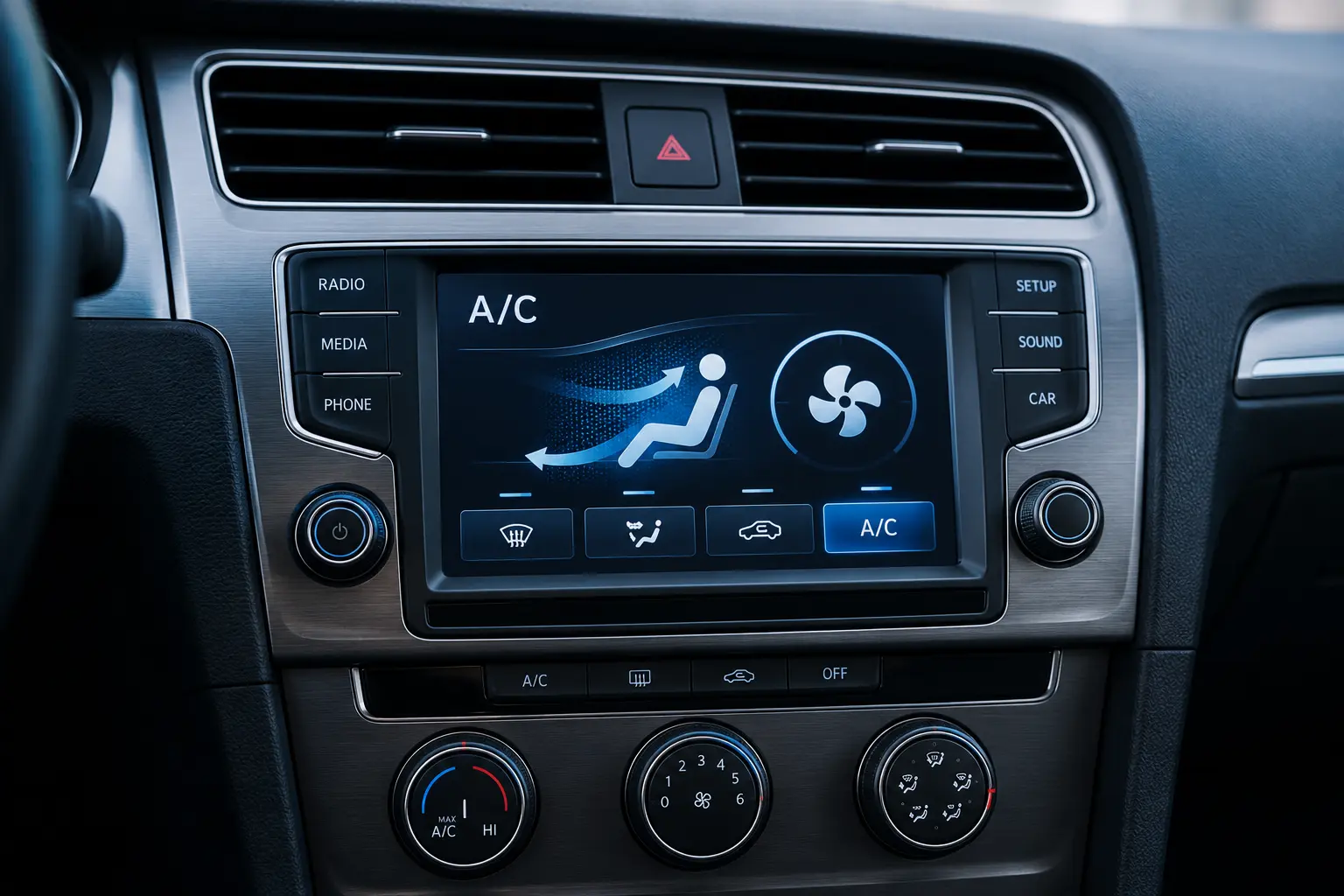
Not everything requires a service center visit. Here are a few simple steps to extend the life of your AC without extra cost:
- Weekly startup. Even in Florida’s mild winters, run the air conditioner for 10–15 minutes every couple of weeks to maintain oil circulation and seal integrity.
- Condenser cleaning. In the spring and fall, clean dirt and debris from the A/C condenser. Do this carefully, using a low-pressure stream of water to avoid bending the cooling fins.
- Timely cabin air filter replacement. Replace the filter every 6,000-9,000 miles or about every six months, whichever comes first. It is inexpensive but directly impacts airflow and cabin hygiene.
- Drying the system before shutdown. Two or three minutes before the end of your trip, turn off the A/C button but leave the fan running. The airflow will dry the evaporator, preventing mold growth.
Read also:
Save on repairs - schedule your AC maintenance in Jacksonville
Air conditioner repair is one of the most expensive aspects of vehicle maintenance. Replacing just the compressor can cost between $400 and $1,200 or more, depending on the vehicle. Furthermore, replacing the evaporator often requires removing large portions of the dashboard, adding significant labor costs.
In contrast, regular maintenance - recharging every two years, disinfection, and inspection - costs a fraction of that amount and typically takes only 1–2 hours.
Don't wait for peak Florida heat to arrive before thinking about your air conditioner. Visit Autoland Jacksonville, a used car dealership and service center, for A/C diagnostics and maintenance. Our technicians will check for leaks, pressure, and oil levels, and perform professional recharging and disinfection, so you can enjoy reliable cooling and fresh air in every drive.
Book your service appointment today!