Self-Driving Cars: What Florida Drivers Should Know
Table of Contents
- What is a self-driving car?
- Driver assistance vs fully autonomous driving
- Levels of autonomous driving
- How driverless cars work
- Self-driving vehicles on the Florida market
- How autonomous vehicles drive
- What are the pros and cons of autonomous vehicles?
- Pros
- Cons
- Find advanced cars with driver-assistance at Autoland Jacksonville
Fully self-driving cars are not yet available for sale worldwide. Most vehicles, including those on the used-car market, still require an attentive human driver. Although automakers and technology companies continue to test increasingly sophisticated autonomous systems, they are not yet ready to fully dismiss human control.
Meanwhile, shoppers in Florida can find a wealth of pre-owned cars in Jacksonville equipped with advanced driver-assistance technologies. Features such as adaptive cruise control, lane-centering assistance, automatic emergency braking, blind-spot monitoring, parking assistance, and hands-free highway driving can make everyday commuting more comfortable and potentially safer when used correctly.
So, what is a self-driving car, and how close are we to truly autonomous vehicles? Read on to learn more.
What is a self-driving car?
A self-driving car, also known as an autonomous vehicle, is a vehicle capable of moving with limited or no human intervention. It is controlled by computers, sensors, cameras, and artificial intelligence.
Despite significant advancements in this field, most modern autonomous systems cannot yet fully replace the driver. Instead, they work in an assistance mode. In certain situations, such as fog, heavy rain, unclear lane markings, or construction zones, the system may become confused and prompt the driver to take control.
Driver assistance vs fully autonomous driving
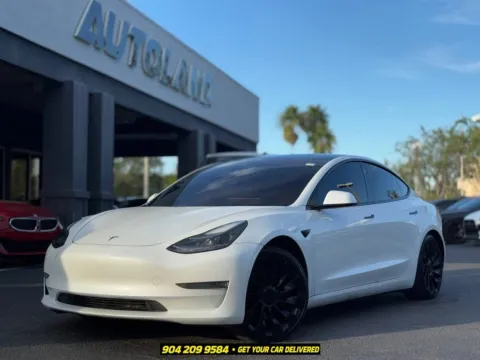
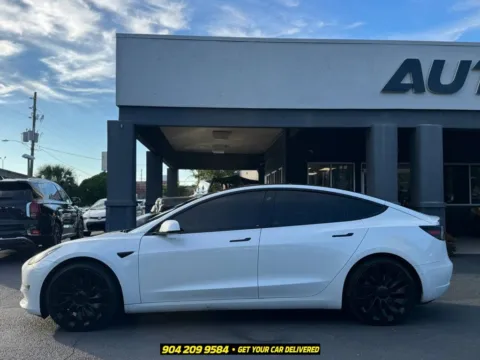
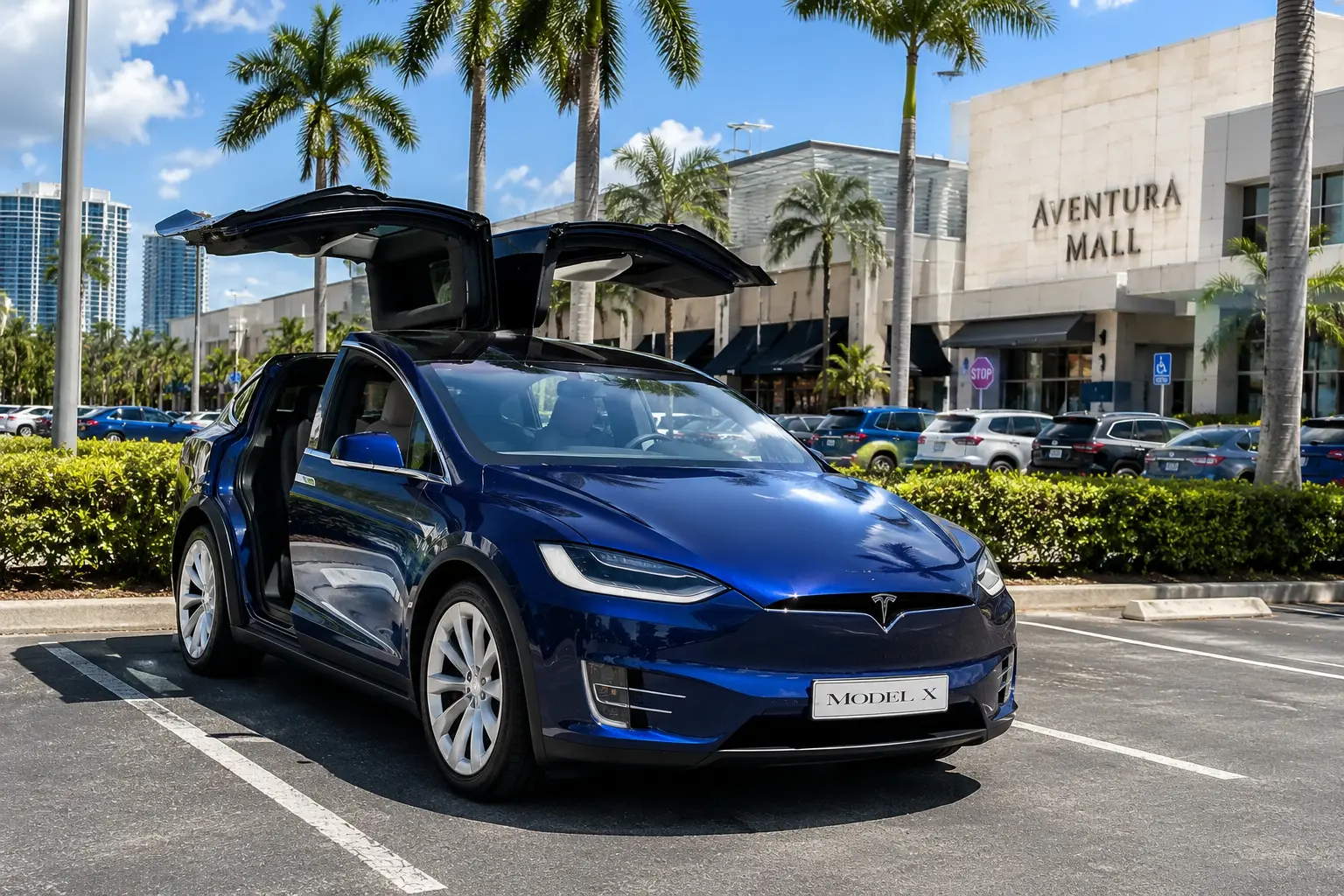
For example, Tesla’s Full Self-Driving (Supervised) system can assist with steering, lane changes, route navigation, traffic lights, and parking, but Tesla states that you must remain attentive and ready to take over. The AI system integrated in Teslas does not make the vehicle fully autonomous.
Levels of autonomous driving
Society of Automotive Engineers (SAE International) has established six levels of automation in driving, ranging from 0 to 5. These levels describe how much of the driving task a system can perform and how much responsibility remains with the human driver.
- Level 0
The driver has full control over the vehicle, operating the throttle, brakes, and steering wheel. Safety features such as forward-collision warnings or automatic emergency braking may be present, but they do not continuously control the vehicle.
- Level 1
The vehicle assists the driver with either steering or acceleration and braking. Common examples of Level 1 automation technology are adaptive cruise control and lane-keeping assistance.
- Level 2
The vehicle can independently control the throttle, brakes, and steering in certain conditions, but the driver must constantly monitor the road and be ready to intervene. Many of today’s most advanced AI systems, including Tesla Autopilot and Full Self-Driving (Supervised), Ford BlueCruise, and GM Super Cruise, are generally considered Level 2 driver-assistance technologies rather than fully self-driving.
- Level 3
The system manages the driving task in specific conditions but may occasionally ask the driver to take control. Unlike Level 2, the driver is not required to constantly monitor the road while the system is operating within its approved conditions; however, the driver must be able to respond appropriately when requested.
- Level 4
The vehicle handles complex traffic situations without driver assistance within a defined operating area or set of conditions. The driver does not need to hold the steering wheel or continuously monitor the road. If the vehicle cannot continue safely, it can generally perform a fallback maneuver, such as slowing down or stopping.
- Level 5
This represents full automation. The vehicle operates without driver involvement and makes all decisions independently under all roadway and environmental conditions that a human driver could reasonably manage. Level 5 vehicles do not yet exist as mass-market consumer products. SAE describes Level 5 as the highest level of automation, with no expectation that a human driver will need to take over.
How driverless cars work
There is no single, universal platform for driverless cars, yet most systems operate on similar principles. To navigate from point A to point B, these vehicles employ a complex array of technologies.
LiDAR
LiDAR is a laser-based sensor that is often mounted on the vehicle’s roof or integrated into the body. It emits laser pulses and measures how long they take to return after reflecting off nearby objects. This process creates a three-dimensional map of the vehicle’s surroundings, sometimes extending to approximately 100 meters, depending on the system.
The data can be combined with high-definition maps and navigation services, enabling the vehicle to identify road features, follow traffic rules, and determine its route.
Radar
Radar helps the vehicle detect and track objects around it. A driverless car may use several radar units positioned at the front, rear, and sides. These sensors estimate how far away objects are, where they are moving, and how quickly they are traveling. In simple terms, radar helps the vehicle understand the distance and speed of surrounding traffic.
Cameras
Cameras recognize objects, traffic signs, traffic lights, lane markings, pedestrians, and cyclists. They are typically positioned around the vehicle, including near the windshield, front grille, side mirrors, and the rear. Modern vehicles may use several cameras to provide a 360-degree view of the surrounding area.
Ultrasonic sensors
Ultrasonic sensors work by sending out sound waves that bounce off nearby objects. When the signal returns to the sensor, the system calculates the distance to the obstacle. This tech is very useful for detecting objects at close range and helping the vehicle avoid collisions while maneuvering in tight spaces or parking.ц
GPS and inertial sensors
GPS and inertial sensors help the vehicle determine its location and direction. Satellite signals, gyroscopes, accelerometers, wheel-speed sensors, and digital maps work together to estimate the car's position and motion.
On-board computer
The on-board computer is the central component of an autonomous vehicle and acts as the “brain” of the system. It collects and processes data from cameras, radar, LiDAR, GPS, and other sensors to make driving decisions, such as whether to accelerate, brake, change lanes, or turn.
Self-driving vehicles on the Florida market
Car manufacturers and tech firms globally are creating and trialing self-driving cars. Some companies specialize primarily in autonomous vehicles, while others are integrating advanced driver-assistance or automated-driving systems into specific production models:
- Tesla: Autopilot and Full Self-Driving (Supervised) can assist with steering, lane changes, navigation, traffic signals, and parking. The driver must remain attentive and ready to take control, so these systems should not be confused with Level 5 autonomy.
- Ford: BlueCruise provides hands-free highway assistance on designated sections of divided highways called Blue Zones. Drivers must continue watching the road and be prepared to resume control.
- General Motors: Super Cruise allows hands-free driving on compatible roads while combining adaptive cruise control with lane-centering assistance. It is available on selected Chevrolet, Cadillac, and GMC models, depending on the model year and configuration.
- Mercedes-Benz: DRIVE PILOT is an example of a limited Level 3 system. In approved conditions and on authorized roads, it can take over the driving task, although the driver must be able to respond when the vehicle requests control. U.S. availability and operating conditions are limited by state regulations and system requirements.
- BMW: Highway Assistant can provide hands-free assistance on certain compatible highways and may assist with lane changes in approved conditions. Availability depends on the model, equipment, software, and market.
- Nissan: Nissan continues to develop ProPILOT and other advanced driver-assistance technologies designed to help with highway driving, lane positioning, and traffic conditions.
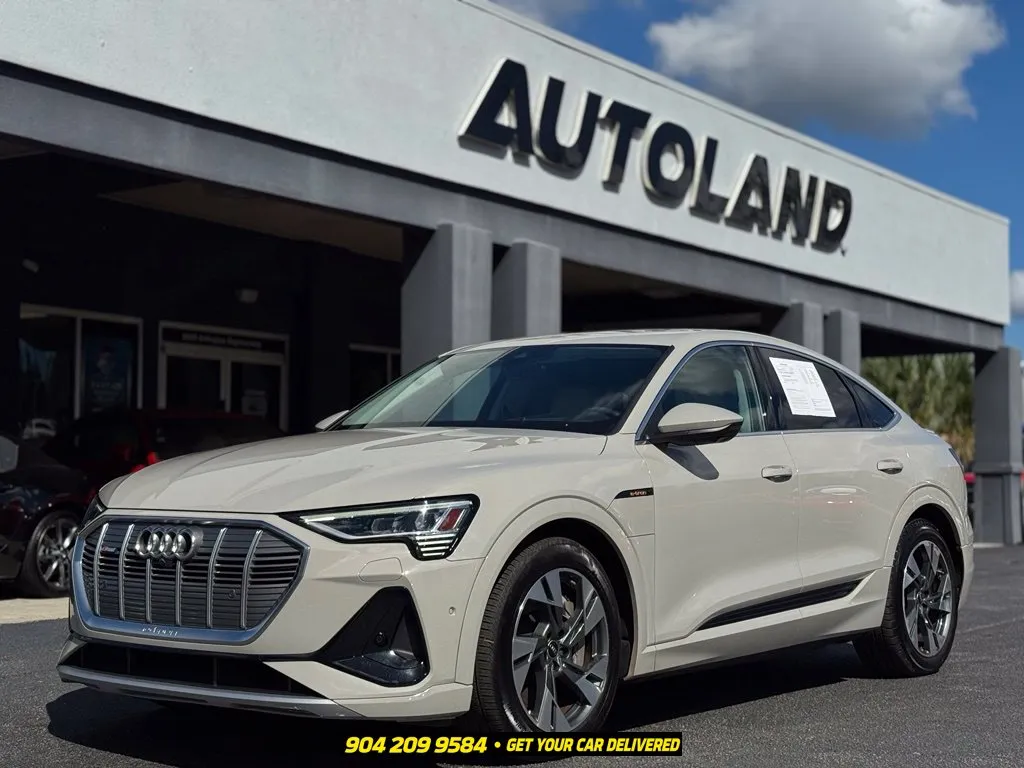
- Audi: Audi vehicles may offer traffic-jam assistance, adaptive cruise control, lane-centering and parking assistance, and other advanced safety technologies, depending on the model and trim level.
How autonomous vehicles drive
Localization
The vehicle precisely determines its location using data from sensors and specialized maps. These maps may contain information about lane markings, traffic lights, traffic signs, intersections, speed limits, and other road features.
Perception
The autonomous vehicle “sees” its surroundings. It identifies objects and determines their direction and speed of movement. This information helps the system recognize potential hazards and make driving decisions.
Prediction
At this stage, the autonomous vehicle attempts to anticipate the behavior of other road users. It analyzes where other cars, pedestrians, cyclists, and motorcycles might go. This is one of the most complex processes because human behavior on the road is not always logical or predictable.
Planning
The self-driving car determines its next action by considering its location, the nearby surroundings, and anticipated behavior of other vehicles, objects, and pedestrians. Its algorithms select a course of action and issue commands to brake, turn, accelerate, or change lanes. All of this happens in a fraction of a second.
What are the pros and cons of autonomous vehicles?
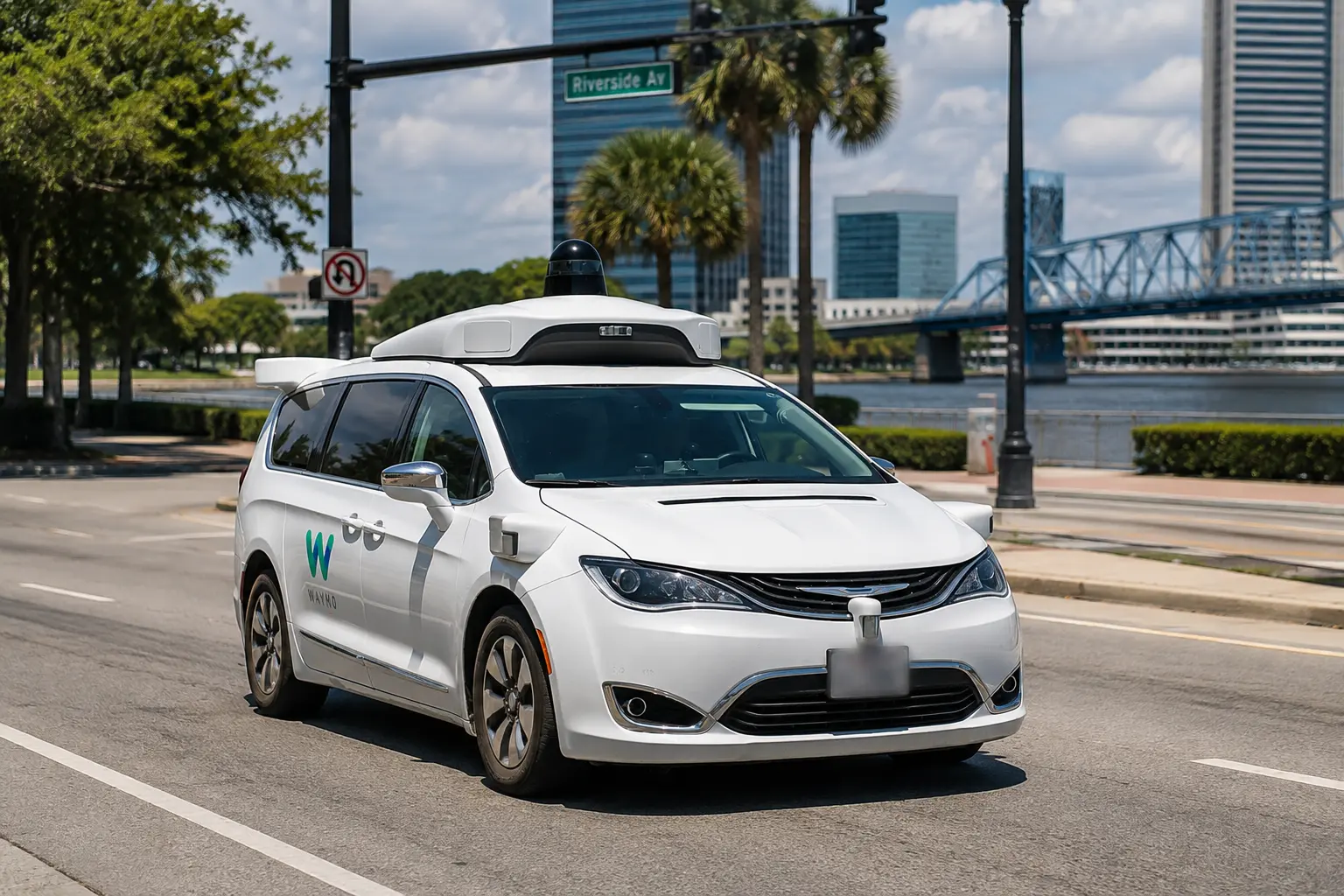
Autonomous vehicles have both advantages and disadvantages. Their significance depends on operating conditions; for instance, different benefits may matter in a city than on a highway.
Pros
- Safety. Automation can reduce the effect of certain human errors, such as distraction, delayed reactions, or following another vehicle too closely. However, driver-assistance systems are not perfect, and drivers must still use them responsibly.
- Efficiency. An automated system may select an efficient route, maintain a steady speed, and reduce unnecessary acceleration. This can help save fuel and reduce emissions.
- Comfort. The driver may experience less stress during long highway trips or heavy traffic, particularly when using systems designed for those conditions.
- Accessibility. Looking ahead, increased automation could offer enhanced independent travel possibilities for those who cannot drive owing to their age, a disability, or health restrictions.
- Reduced traffic congestion. With widespread adoption, connected and autonomous vehicles could move in a more coordinated manner and reduce unnecessary traffic delays.
Cons
- High cost. Modern technologies such as LiDAR, radar, cameras, sensors, and powerful computers can significantly increase a vehicle’s price. Repairs and calibration may also be expensive after a collision.
- Technical limitations. Not every vehicle can be adapted for advanced automated-driving systems, and the range of available models is currently limited. Some features also work only on mapped roads or under specific conditions.
- Weather conditions. Heavy rain, fog, glare, flooding, or other challenging conditions may reduce the performance of cameras and other sensors. Florida drivers should also consider how heavy rain, standing water, and bright sunlight may affect visibility and system operation.
- Legal issues. Regulations governing automated-driving systems vary by state and country. Some technologies are approved only on specific roads or under specific operating conditions.
- Hacking risks. Like other internet-connected devices, a connected vehicle can be a target for cyberattacks. Automakers use security measures, but no connected system is completely free from risk.
- Driver overconfidence. One of the most important risks is misunderstanding what a system can do. A feature described as “hands-free,” “autopilot,” or “self-driving” may still require the driver to watch the road and respond immediately.
Find advanced cars with driver-assistance at Autoland Jacksonville
Fully self-driving cars are not yet available to most consumers, but drivers do not have to wait for the future to enjoy meaningful automotive technology. Florida’s used car market offers a wide range of electric vehicles, hybrids, and gasoline-powered models with advanced safety and driver-assistance features.
Visit Autoland Jacksonville to find an electric car, hybrid, or fuel-efficient used vehicle with the safety features and advanced AI technology that fit your needs and budget. Our inventory is updating fast, so get in touch with the sales team to check the status of any model you are considering and get information about new arrivals.