How Many Miles Can a Car Last? What to Really Expect When Buying a Used Car in Florida
Table of Contents
- The reality: How long do cars actually last?
- Older cars: Why age still matters
- Should I avoid older cars completely?
- Cars from the 2000s: Affordable, but may be worn out
- Mid-Age: Good assortment to choose from with proper attention
- The sweet spot: 5–7-year-old pre-owned cars
- Latest cars: Better tech, different trade-offs
- What is the best mileage to buy a used car in Jacksonville?
- Average mileage by popular brands in the US
- Is 100,000 miles too much for a used car in Jacksonville?
- Can a car last 300,000 miles?
- What really affects a car’s lifespan?
- How do I know if a used car was well-maintained?
- Buying a pre-owned car from Autoland Jax
Every car has a lifespan. It’s usually measured not just in years, but in mileage - and there comes a point where repairs become more frequent. But here’s the part people often overlook: most cars today last much longer than expected, especially if they’ve been properly maintained.
So instead of asking how many miles a car can last, you should focus on choosing one that still has plenty left. And this guide will help.

The reality: How long do cars actually last?
These days, it’s completely normal for a vehicle in the US to reach:
- 150,000 to 200,000 miles without major issues
- 200,000+ miles with consistent maintenance
- 10–15 years of reliable use
Of course, there are always exceptions. Some cars run not because everything is perfect, but almost “in spite of” their condition. Others fail early simply because they weren’t cared for.
That’s really what it comes down to: maintenance and ownership matter just as much as the brand or model.
Older cars: Why age still matters
Let’s be realistic for a moment. Cars produced in the previous century, even from the late 90th, are over 25 years old now. No matter how well-built they were back then, time takes its toll.
- Rubber parts dry out
- Metal components corrode
- Electronics degrade
- Mileage often exceeds 200,000–300,000 miles
Even the most reliable models can become unpredictable at that age. You might find one that still runs, but it will likely need ongoing repairs.
For most Jacksonville buyers, especially those looking for a dependable daily driver, this segment is no longer the safest bet.
Should I avoid older cars completely?
Not necessarily, but vehicles produced before 2010 (15+ years) usually require more maintenance and are better avoided. Below, our technicians from the Autoland Jax car dealership will explain why.
Cars from the 2000s: Affordable, but may be worn out
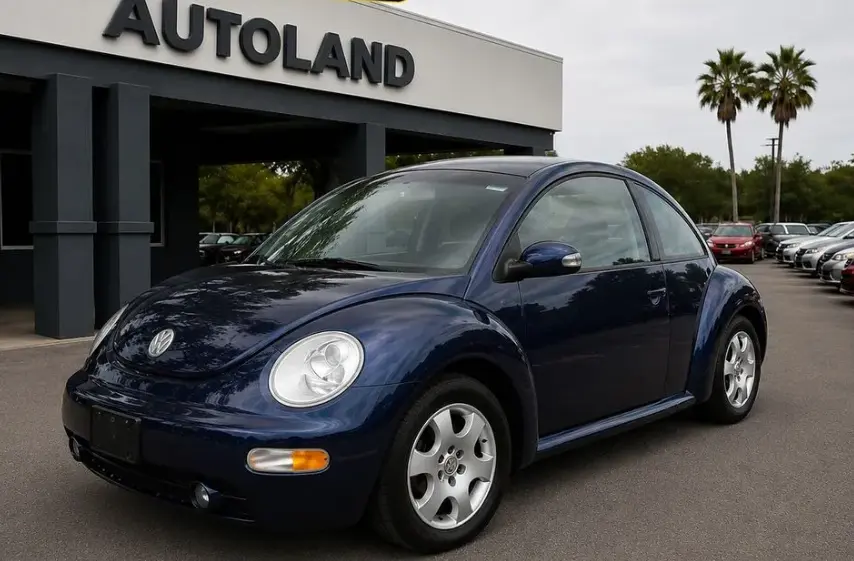
Vehicles from the early 2000s are interesting. On the one hand, they were built with relatively simple, durable engines. On the other hand, most of these autos have already seen a lot of road time.
If we take an average annual mileage of around 12,000–15,000 miles, a 2007 vehicle today could easily have over 150,000–200,000 miles.
That doesn’t automatically make it a bad purchase, but it does mean:
- Components are nearing the end of their lifespan
- Repairs become more frequent
- Reliability becomes less predictable
- Original spare parts may not be available anymore
The prices on such cars are tempting, and you can find premium models at Jacksonville car lots for a fraction of their original cost. But be prepared for occasional repairs - if you have some expertise as a mechanic, these cars may be your practical choice.
Mid-Age: Good assortment to choose from with proper attention
Cars that are around 10–15 years old sit somewhere in the middle - they’re not exactly old, but they’re no longer in the low-mileage category. Most of them are already well past 120,000 miles, and that’s where you start seeing the natural aging of components: suspension parts, seals, electronics, and sometimes transmissions.
Many of these cars were built during a period when manufacturers still prioritized durability, allowing them to continue running with proper maintenance.
The key here is condition over age. A well-kept 2011–2016 vehicle with a clean history can be a very reasonable purchase for the money, especially if you’re not planning extremely high annual mileage.
The sweet spot: 5–7-year-old pre-owned cars
Autos about 5 to 7 years old often strike the perfect balance between price, mileage, and reliability. They’re modern enough to include safety features and technology, but not so old that wear and tear becomes a constant issue.
At the Autoland Jacksonville used car dealership, this is one of the most popular segments for a reason:
- Mileage is typically under 100,000
- Many such pre-owned vehicles have a single owner
- Maintenance history is easier to verify
- They still have plenty of life left
A well-maintained second-hand car in this range can easily last another 100,000 miles or more.
Latest cars: Better tech, different trade-offs
- Some newer vehicles are designed with efficiency and innovation in mind, sometimes at the expense of long-term reliability. While many will still reach 150,000 to 200,000 miles, what happens beyond that isn’t always as predictable as it was with older, simpler engines.
- That’s one reason why many buyers prefer slightly used, reliable and predictable vehicles instead of brand-new ones - they get modern features without taking the biggest depreciation hit.
- Another reason related to the newly integrated technologies is the lack of statistics. Before comprehensive data on all potential breakdowns is gathered and the most effective solution for a new feature is finalized, numerous complicated failures can arise after considerable driving.
- The third reason is spare parts: with a well-known auto, the spare parts are not a big deal. Traditional breakdowns are clear, and the parts for such cars are often available in stock.
What is the best mileage to buy a used car in Jacksonville?

In Florida, used-car shoppers usually get the best balance of price and longevity by focusing on both mileage and maintenance history. A good benchmark is under 60,000 miles for a 5-year-old vehicle, or more generally below 12,000 to 13,500 miles per year; that range often signals normal wear without pushing too far into higher-risk territory.
That said, mileage alone does not tell the full story. A well-maintained 80,000-mile car can be a smarter purchase than a neglected 45,000-mile one, especially if it has solid service records and no accident history. For Jacksonville, the safest sweet spot is usually a clean, well-kept car in the 30,000 to 80,000-mile range, with the lower end offering more cushion and the higher end still being viable when the condition is strong.
Average mileage by popular brands in the US
If you’re wondering how many miles a car can last, brand reputation still plays a role. Here’s what you can generally expect, according to iSeeCars data:
- Toyota: 200,000–300,000 miles
- Honda: 200,000–300,000 miles
- Ford: 150,000–250,000 miles
- Chevrolet: 150,000–250,000 miles
- Nissan: 150,000–250,000 miles
- Hyundai: 150,000–200,000 miles
- Kia: 150,000–200,000 miles
- Subaru: 200,000–250,000 miles
For example, a Honda Accord with 90,000 miles is often considered just halfway through its usable life.
Is 100,000 miles too much for a used car in Jacksonville?
Many vehicles today can go well beyond 200,000 miles, so 100,000 is often considered mid-life. In Jacksonville, a used car with 100,000 miles is not automatically a bad choice. It can still be a smart purchase if the vehicle has been serviced regularly, drives well, and has no signs of major wear or damage. The key is to judge the car’s overall condition and value, not the odometer alone.
Can a car last 300,000 miles?
Yes, especially brands like Toyota and Honda. Autos with such mileage require consistent maintenance, but it’s absolutely possible for Honda and Toyota vehicles to exceed the 300.000-mile limit.
What really affects a car’s lifespan?
Mileage alone doesn’t tell the full story. Two cars with the same mileage can be in completely different conditions.
Here’s what really matters:
- Maintenance history
- Driving style (highway vs. city)
- Number of previous owners
- Accident history
- How the car was used (personal vs. commercial, like taxis)
It’s always worth checking a vehicle’s history reports. Some high-mileage cars on the market were used commercially, which can significantly impact wear and tear. Pay attention to the interior, buttons, and upholstery condition: an overused look is a serious warning, too.
How to read a vehicle history report
How do I know if a used car was well-maintained?
Look for service records, a clean vehicle history report, and signs of regular maintenance, such as oil changes and inspections.
Buying a pre-owned car from Autoland Jax
Buying a used car doesn’t have to feel like a gamble.
At Autoland Jacksonville, every vehicle is carefully selected and inspected, so you’re not just guessing how long it will last - you have real information to rely on.
Instead of worrying about worst-case scenarios, you can focus on finding a car that:
- Fits your budget
- Matches your lifestyle
- Still has plenty of miles left to give
Read also:
What certified-pre-owned means
So, how many miles can a car last? In many cases, far more than people expect. The trick is not about avoiding used cars - it’s about choosing the right one. Visit the Autoland dealer in Jacksonville to buy your perfect pre-owned auto that will last for years to come.